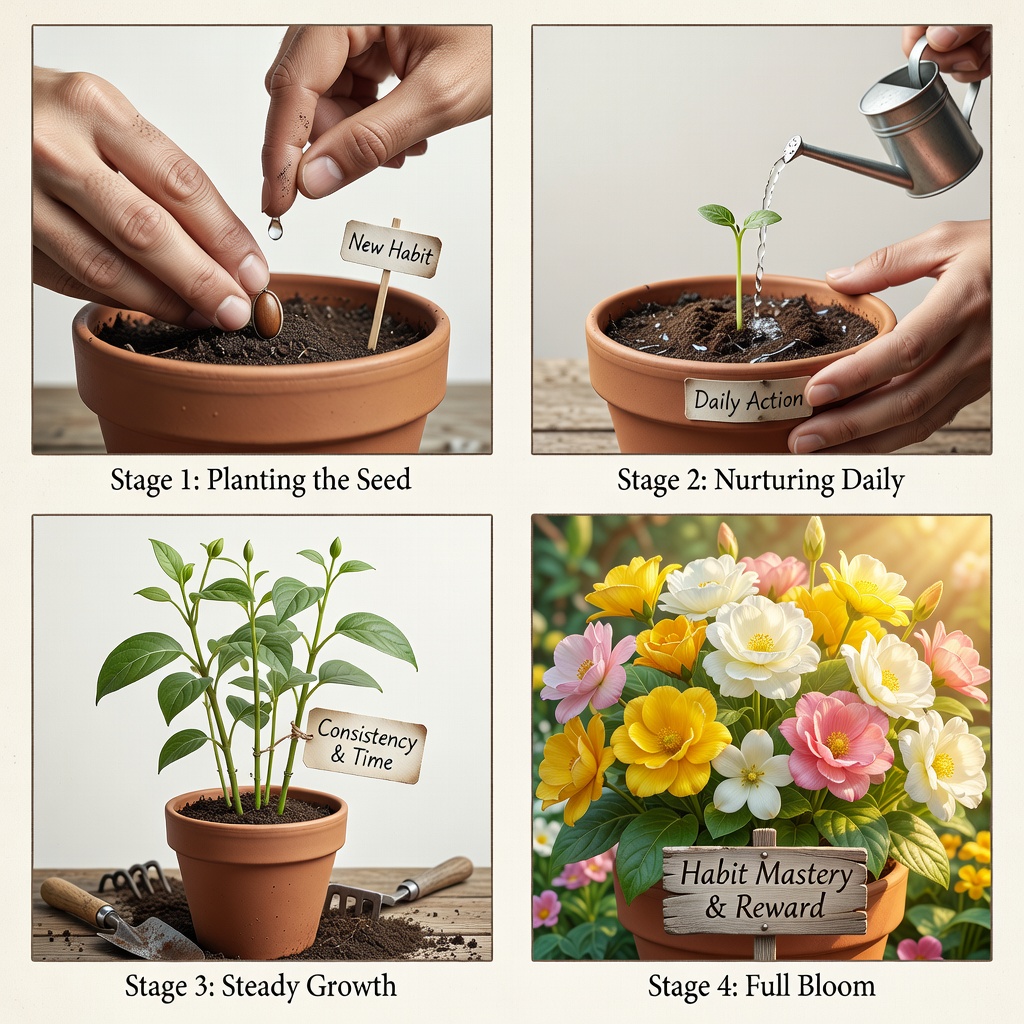
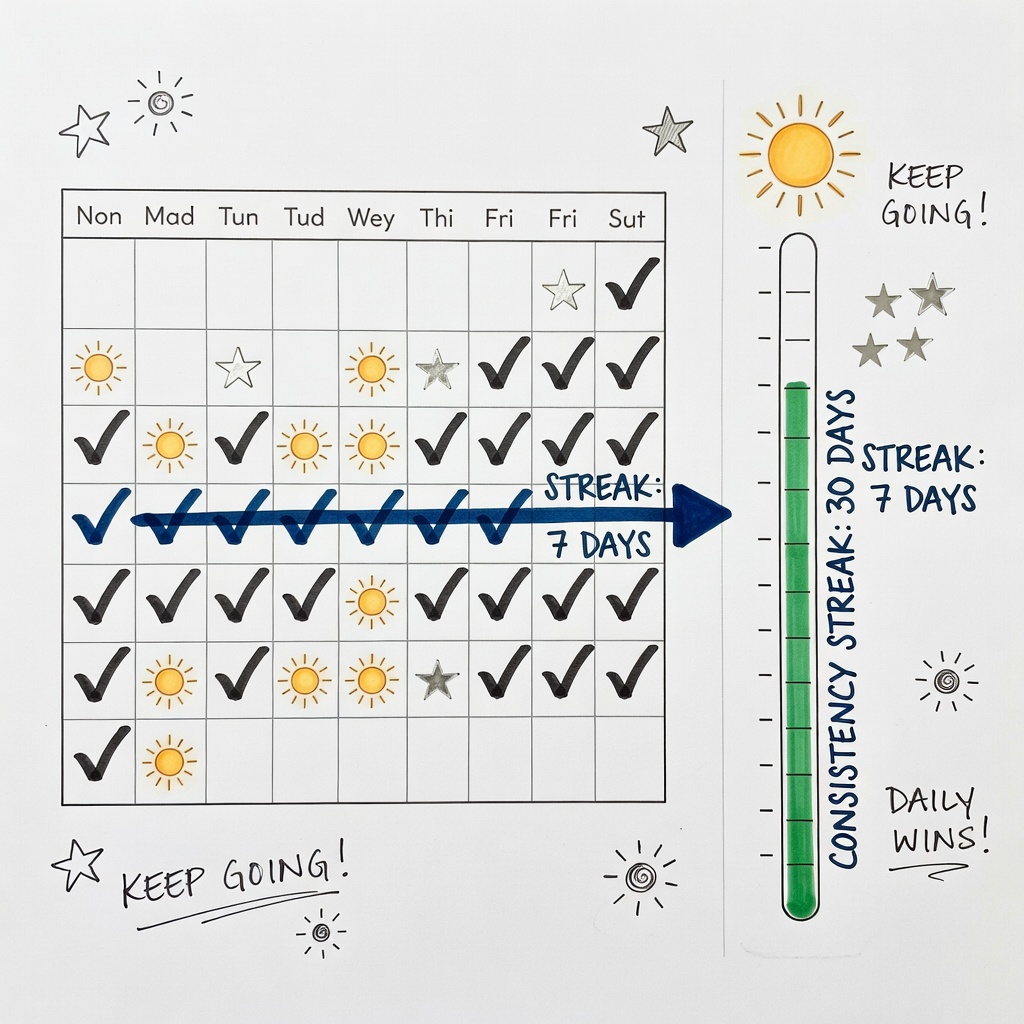
Consistency is misunderstood. Most people think it requires extraordinary willpower or motivation. The reality is far more encouraging: consistency is the result of smart system design. When your environment, schedule, and identity are aligned, consistent behavior becomes the path of least resistance — not the path of greatest discipline.
This guide is not about getting more motivated. Motivation fades. It is not about trying harder. Effort without direction is exhausting. This guide is about designing a life where showing up is easy, natural, and inevitable. Where consistency is the default, not the exception.
We will move through six chapters — from understanding what consistency actually is, to building frameworks that sustain it for years. Each chapter builds on the last. Read it in order, or jump to what you need most. Either way, you will find actionable strategies you can start today.
Understanding Consistency
Definition: Doing the right things regularly, not perfectly
Consistency is not perfection. It is not an unblemished 365-day streak. It is not doing something every single day without exception. Consistency is the ratio of days you show up to the days you could have. It is directional — pointing toward a goal — and it is forgiving, because life is messy.
Perfectionism says: "I must do this every day or I have failed." One missed day becomes a reason to quit. Perfectionism creates an all-or-nothing dynamic that guarantees eventual failure.
Consistency says: "I do this most days, and when I miss one, I return the next day." Missing a day is data, not a verdict. Consistency treats the practice as permanent and individual sessions as optional.
The consistency paradox: Why we fail even when motivated
Here is the paradox: the days you most need your habits are the days you feel least like doing them. You want to exercise when you are energized — but the benefit would be greatest when you are depleted. You want to meditate when you are calm — but the need is greatest when you are anxious.
This paradox breaks motivation-based approaches. If the habit only happens when you feel like it, it will not happen when you need it most. The solution is automation: make the behavior happen regardless of how you feel, by designing the decision out of your day.
Identity-based consistency: "I am the kind of person who..."
The most powerful shift in habit science of the last decade is the move from outcome-based goals ("I want to lose 10kg") to identity-based goals ("I am someone who takes care of their body"). When a behavior is tied to identity, missing it feels wrong — like a violation of who you are, not just a missed task.
4 Consistency Myths, Debunked
The Consistency Framework: 4 Pillars
After studying the research on habit formation and working with thousands of habit trackers, we have identified four pillars that every sustainable consistency system requires. Miss one, and the system eventually collapses.
Know exactly what you are committing to. Vague goals produce vague habits. "Exercise more" fails. "Walk for 20 minutes after breakfast on weekdays" succeeds. Specificity creates accountability.
Make the habit effortless to start. Every obstacle between you and your habit is a reason to skip it. Reduce friction to near zero. Set your running shoes by the door. Keep your journal open on your desk.
Change your spaces, change your behavior. Your environment is the most powerful habit trigger available. Design your spaces to make desired behaviors obvious and undesired behaviors invisible.
Plan for failure before it happens. Every consistency system will be tested. The question is not whether you will miss a day — it is whether you have a plan for returning when you do.
Environmental Design Deep-Dive
Of the four pillars, environmental design may be the most underestimated. We consistently overestimate the role of motivation and underestimate the power of context. Wendy Wood's decades of research confirm: where you are and what surrounds you determines much of what you do.
Visual cues and triggers
Habits are cued by sensory triggers — what we see, hear, smell. To build a habit, create a visual cue that makes the behavior obvious. Want to read more? Put your book on your pillow. Want to take vitamins? Place them next to your coffee maker. Want to meditate? Set a cushion in the corner of your bedroom floor.
The "reset ritual" — preparing your environment for tomorrow
The most consistent people have a nightly ritual of preparing tomorrow's environment. Five minutes before bed: lay out workout clothes, fill a water bottle, open your notebook to a fresh page, queue up tomorrow's playlist. The tomorrow version of you will thank you — and will have one less decision to make at the moment of action.
Phone-free zones
Your smartphone is the single greatest source of friction against almost every positive habit. Creating phone-free zones — the bedroom, the dining table, the first hour of your morning — removes the most powerful competitor your habits have. This is environment design in its most impactful form.
Implementation checklist: 10 environmental changes you can make today
Building Your Consistency Stack
The keystone habit concept
A keystone habit is one habit that naturally pulls other habits into place. Charles Duhigg found that regular exercise, for example, tends to produce improvements in sleep, diet, productivity, and mood — without people deliberately trying to change those things. Identifying and anchoring your keystone habit is the highest-leverage move available to you.
Duhigg's research identified keystone habits as those that create "small wins" — early proof that change is possible — and establish structures that other habits can attach to. Common keystone habits: morning exercise, daily journaling, meal planning, and regular sleep schedules.
Building from your strongest existing habit
The most reliable way to build a new habit is to attach it to an existing strong habit using "habit stacking." After I [existing habit], I will [new habit]. After I pour my morning coffee, I will write three sentences. After I sit down at my desk, I will open my habit tracker. The existing habit acts as the trigger, removing the need for a separate reminder.
Time blocking for habits
Do not leave your habits to chance. Block time for them in your calendar as you would a meeting. When you have designated time for a habit and that block is protected from other commitments, completion rates increase dramatically. The most important habits deserve the most protected time — usually early in the day, before urgency and other people's priorities crowd them out.
Weekly review process
The weekly review is the master habit — the habit that sustains all other habits. Every Sunday (or Friday), spend 20 minutes reviewing the past week: Which habits were completed? Where did you fall short? What made the difference? What needs to change? This reflection prevents drift, catches problems early, and keeps your system calibrated to your actual life.
Recovering From Breaks
The science of re-starting
Research consistently shows that the most dangerous moment for a habit is the day after you miss it. Not the missing itself — but the story you tell yourself about the missing. People who frame a missed day as "I am someone who does not do this" are far less likely to return than those who frame it as "I had an off day, and I return tomorrow."
The 2-day rule
The simplest recovery rule available: never miss twice. Missing one day is an accident. Missing two days is the start of a new habit — a habit of not doing the thing. One day off is acceptable. Two days off is a pattern. The moment you feel yourself tempted to skip a second day, that is your signal that the habit needs your full attention.
Mindset shifts for recovery
When returning after a break, resist the urge to "make up for lost time." Someone who missed a week of exercise and then runs for 90 minutes is far more likely to be too sore to run the following day than to build momentum. Return at your normal level. Normal is the goal. Drama is the enemy.
When to modify a habit vs. restart it
If you have missed more than two weeks, consider whether the habit needs modification rather than simple resumption. A habit you keep abandoning may be wrong for this season of your life — too ambitious, poorly timed, or misaligned with your current priorities. Modify before you restart: reduce the intensity, change the time, or simplify the target. Starting smaller than you think you need to is never a mistake.
Long-Term Consistency: The Marathon Mindset
Moving from motivation to identity
In the early weeks of a habit, motivation carries you. In the middle months, systems carry you. But in the long run — years — it is identity that sustains consistency. You do not go to the gym because you are motivated. You go because you are someone who goes to the gym. This identity shift is the final milestone of habit development, and it is worth explicitly cultivating.
Celebrating process over outcomes
Outcome-focused measurement ("I need to lose 5kg") creates anxiety when results are slow and makes the practice feel conditional. Process-focused celebration ("I showed up 5 times this week") acknowledges the only thing you actually control, and makes showing up the reward in itself. Celebrate your process with the same enthusiasm you would celebrate an outcome.
Building habit communities
Humans are social animals, and habit research consistently shows that social accountability dramatically improves completion rates. Find or create a small group — even just one accountability partner — with whom you share your habit commitments. The social stakes raise the motivation floor on the days when internal motivation runs low.
When habits become who you are
The final stage of habit mastery is when you stop thinking of your practices as habits at all. Brushing your teeth is not a habit — it is just something you do. When your morning walk, your journaling, your reading, or your meditation reaches this stage of automation, you have succeeded. Not because you never miss a day, but because you can no longer imagine yourself as someone who doesn't do these things.
Your Consistency System Checklist
Quick Start Action Plan
Don't just read — act. Here is your roadmap from today to a year from now.