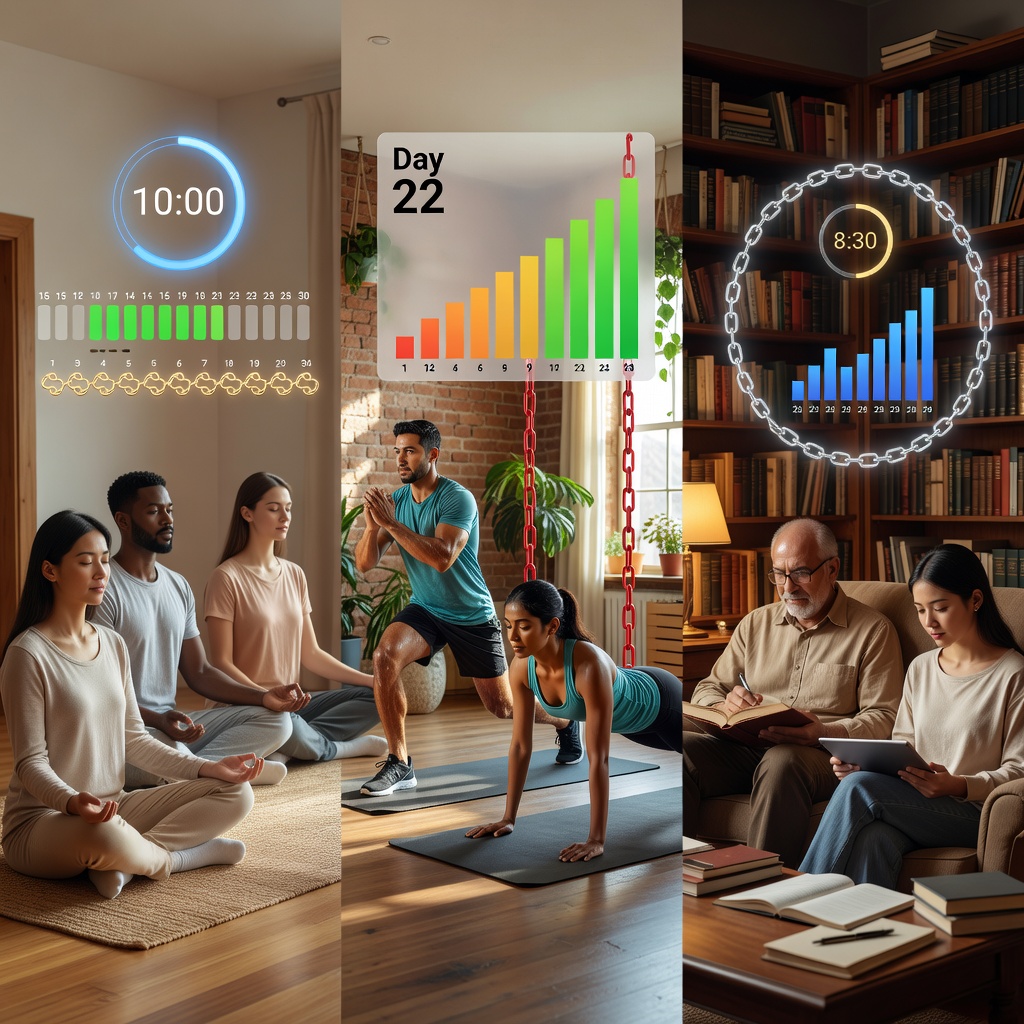
The Morning Routine Industrial Complex
We've all seen the articles. Wake at 4:30am. Cold plunge for ten minutes. Meditate for sixty minutes. Journal three full pages. Exercise for forty-five minutes. Read for thirty minutes. Cook a healthy breakfast. All before 7am. If this works for you, wonderful. But for most of us — parents with young children, people with long commutes, those working early shifts, night owls forced into early mornings — this kind of routine is a recipe for failure.
The morning routine content machine is enormous, and it has produced some genuinely useful ideas. But it has also created a toxic pattern: ordinary people adopt extraordinary routines designed for extraordinary circumstances, fail to maintain them within two weeks, and conclude that they are the problem. They are not. The routine is the problem.
The relentless sharing of elite morning routines has created a benchmark that most people will never meet — and worse, one that they shouldn't want to meet. Your morning should serve your life, not perform someone else's ideal of productivity. The science of habit formation is clear: consistency beats intensity every time. A modest routine you actually follow is infinitely more valuable than a heroic routine you abandon by February.
Why Copy-Paste Routines Fail
The reason other people's morning routines don't work for you isn't a lack of discipline — it's a mismatch between their design constraints and yours. There are four fundamental variables that make every person's ideal morning routine uniquely their own:
- Chronotype. Roughly 25% of people are natural morning types, 25% are genuine night owls, and the remaining 50% fall somewhere in between. Forcing a night owl into a 5am routine doesn't just feel unpleasant — it creates measurable cognitive impairment. Your chronotype is largely genetic and largely fixed. Working with it instead of against it is not laziness; it's intelligence.
- Life circumstances. A single person living alone in a quiet apartment has a fundamentally different morning landscape than a parent of three young children, a person with a 90-minute commute, or someone who works a 6am shift. Any effective morning routine must be designed within the actual constraints of your actual life, not an imagined ideal life.
- Goals and values. A morning routine optimized for creative output looks completely different from one optimized for physical fitness, or one designed for emotional stability and stress management. What matters most to you should drive what appears in your morning routine.
- Personality. Some people thrive with high structure and many scheduled steps. Others feel constricted by detailed plans and do better with a loose framework and two or three non-negotiable anchors. Neither approach is superior — both can produce excellent results when matched to the right person.
"The best morning routine is one you actually do. Consistently."
The 3-Element Framework
Rather than copying someone else's routine wholesale, build yours from three structural elements. This framework is flexible enough to work for any lifestyle and any chronotype while providing the structure that makes habits stick.
Anchor · Action · Reward
The single non-negotiable habit that pulls everything else into place. It's the first domino. When you do it, the routine begins. When you skip it, everything collapses. Choose something simple, immediate, and already semi-automatic — drinking a glass of water, making your bed, or stepping outside.
Small habits that follow naturally from the anchor. They should feel like a natural sequence, not a chore list. Each one should take under 15 minutes and serve one of your core goals. The key word is "supporting" — they support the anchor, not compete with it.
Something genuinely enjoyable that closes the routine and signals its completion. This might be your first coffee, a few minutes of music, reading for pleasure, or a quiet moment before the day accelerates. The reward should be conditional on completing the routine — it becomes the payoff your brain associates with the habit sequence.
Real Morning Routine Examples
Here are three contrasting examples that demonstrate how the same framework produces radically different routines for different people and circumstances.
The 15-Minute Minimalist
The 45-Minute Builder
The 90-Minute Performer
Notice that all three routines share the same structure — anchor, supporting habits, natural end point — but look completely different in execution. The 15-minute minimalist isn't less serious about their morning than the 90-minute performer; they've designed a routine that fits their reality. Both are equally valid.
Designing Your Own: A Step-by-Step Guide
Use this process to design a morning routine that fits your actual life and serves your actual goals.
-
1Define your "must-have" outcomes
Write down the 2-3 things that would make your morning feel genuinely successful. Not aspirational ideals — real, honest outcomes. "Feel calm before work." "Move my body." "Know my priorities." These become the foundation of your routine design.
-
2Identify your natural wake time and energy pattern
When do you naturally wake up without an alarm, when you're not sleep-deprived? That's your chronotype signal. Also notice when your mental energy peaks — for many people, the first 60-90 minutes after waking are their sharpest. Design your most important habits around that peak.
-
3Choose 1 anchor habit
It should be the first thing you do, or very nearly so. It should be simple enough to complete on your worst mornings. And it should naturally lead into the rest of your routine. The most reliable anchors are physical and immediate: water, movement, fresh air, light.
-
4Add 1-2 supporting habits
Stack them after the anchor in a sequence that feels natural, not forced. Each habit should take no more than 15 minutes in its minimum viable form. If your calendar only gives you 20 minutes in the morning, design for 20 minutes — not for the theoretical version of yourself who has 90.
-
5Build a transition ritual
Create a clear, intentional end to your morning routine — a signal that the routine is complete and the rest of the day begins. This might be a specific action (brewing coffee, packing a bag) or a specific time. The transition ritual prevents routines from bleeding into the full day with no boundaries.
-
6Track for 30 days and adjust
Run the routine as designed for 30 days before making significant changes. You need enough data to distinguish "this habit doesn't work for me" from "this habit is hard because it's new." After 30 days, review honestly: what's working, what feels forced, what's missing?
What Makes Routines Stick
Beyond the structure of the routine itself, three environmental and behavioral factors separate routines that stick from those that fade within weeks:
Environmental design. The most important morning preparation happens the night before. Lay out your workout clothes. Prepare your journal and pen. Set your water glass on the nightstand. Fill the coffee maker. Every morning decision you can eliminate in advance is one less point of friction when willpower is lowest — immediately after waking.
Eliminating decisions. Decision fatigue is real, and mornings are when it matters most. The fewer choices your routine requires, the more reliably you'll execute it. The ideal morning routine runs almost automatically, with your conscious mind barely involved until you've completed the first few steps. Sequencing matters here too: always do the same habits in the same order, so the completion of each triggers the start of the next.
Protecting time boundaries. A morning routine without a protected time boundary slowly gets colonized by email, social media, news, and other people's demands. Decide in advance when your phone comes on, when you check messages, when work begins — and treat those boundaries as non-negotiable for the first 30 days while the routine is forming.
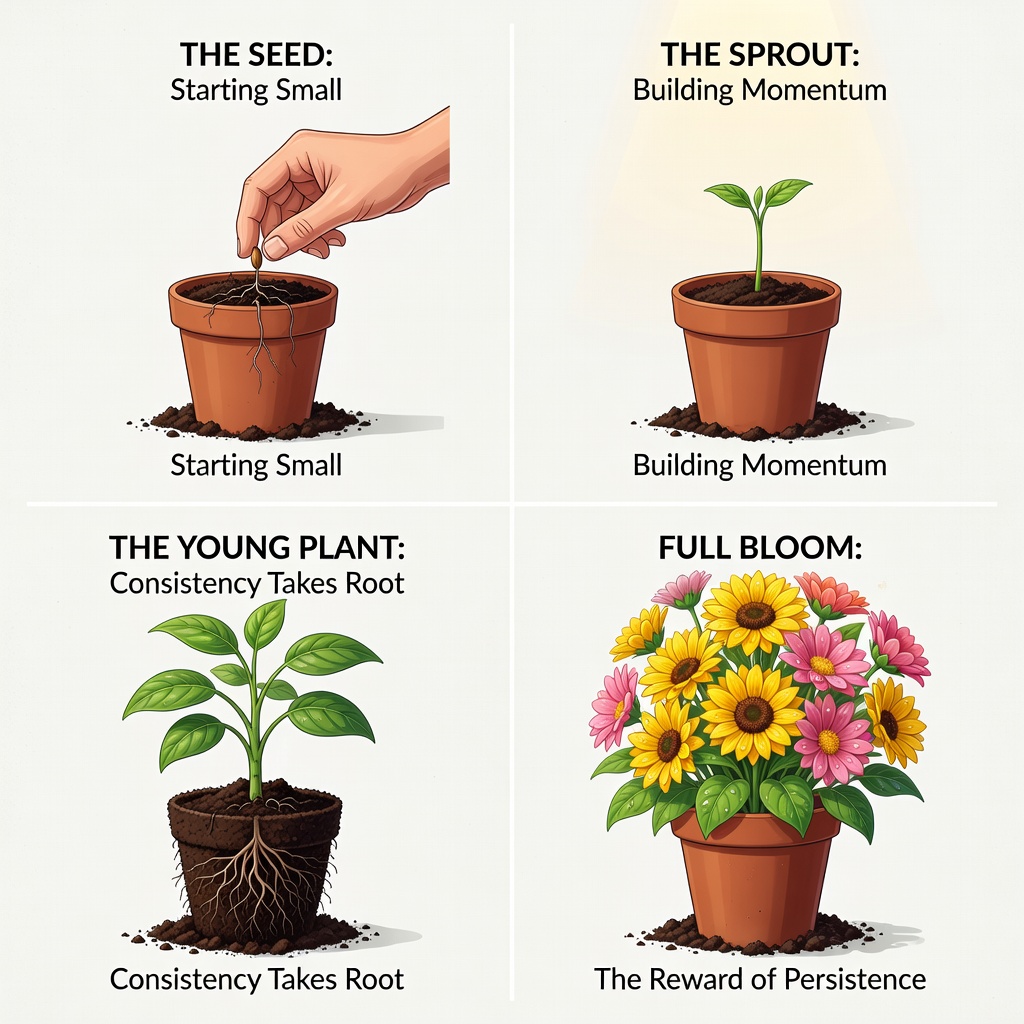
The Consist Morning Template
We've built a free Morning Routine Template based on the 3-element framework above. It includes a design worksheet for mapping your anchor, supporting habits, and transition ritual, along with a 30-day tracking calendar to monitor consistency and spot patterns. It's available in both printable PDF and digital formats — no email required.
The template is deliberately minimal. A single page. Space to write your routine, space to reflect after 30 days. We believe a morning routine tracker should take seconds to use, not minutes — because time you spend tracking your routine is time you're not in the routine.
Browse Morning Templates →